Tuesday, September 27, 2011
Foreign Burial of American War Dead
The Foreign Burial of American War Dead – A History by Chris Dickon (McFarland, 2011) [http://theforeignburialofamericanwardead.com/]
As Chris Dickon so vividly demonstrates in his new book The Foreign Burial of American War Dead – A History, it wasn’t always the policy of the US government and military to not leave anyone behind, to account for all combat casualties and provide an honorable burial for those who have given their lives for their country
Rather it is a tradition that was only slowly and painfully realized and a policy that must be continually explained to each new generation so those who sacrificed their lives for the benefit of the living are not forgotten
This long neglected subject caught the interest of Chris Dickon and he has done a masterful job of researching the facts and presenting them in an interesting and readable way. Well documented with extensive footnotes, a reliable index, appendix and many photos, Dickon’s book will certainly be the primary reference work on this subject for many years to come.
While this book chronicles the changes in attitudes about the care for the graves of those killed in combat, it is also timely and pertinent in regards to the graves of the first known combat casualties abroad – the remains of the 13 officers and men of the USS Intrepid who were buried in Tripoli in 1804 and remain there today.
As Dickon explains in his recent OpEd article Bring U.S. naval hero home to America [http://hamptonroads.com/2011/09/bring-us-naval-hero-home-america], “The right of return for American war dead wasn't fully implemented until after the Civil War, and it excluded those who had died in earlier years. Until that time, there had been just two apparent official attempts to bring home military members buried abroad.”
That would be John Paul Jones, who Teddy Roosevelt had repatriated from his grave in Paris and reburied at Annapolis, and Richard Somers and the men of the Intrepid, who still remain buried in Tripoli today, five in marked graves at a walled cemetery and eight buried under a Martyr’s Square outside the walls of the old castle fort.
From the Shores of Tripoli to the Halls of Montezuma, Flanders Field and Normandy, Dickon’s book chronicles the fascinating story of the burial of American war dead, and describes how the American Battle Monuments Commission (ABMC) owns and oversees the maintenance of the foreign cemeteries, though not the graves in Tripoli.
As Dickon returns to the status of the situation in Tripoli at various times in the chronology, it is a recurring theme that brings the history into the realm of current events that are still happening in revolutionary Libya.
As explained in the first of a number of fact-filled Appendix on various sites around the world, he notes the names of the three officers buried in Tripoli – Richard Somers, Henry Wadsworth [Longfellow’s uncle] and Joseph Israel, and names the ten seamen and their ships. He explains: “It is believed that ten seamen were buried on the beach, and three officers buried together on land above the beach. Known and possible reburials since 1804 have resulted in five unnamed Intrepid crew being [re]buried in a Protestant cemetery near the beach and the belief that five crewmen are buried at one location under Green Park [now Martyr’s Square]. Richard Somers and two other officers are believed to be buried in another location beneath [the Square], approximately 500 feet from the west gate of the Old Castle Fort.”
While Dickon’s subject is brought up on Veteran’s and Memorial Day every year, when flags are placed on the graves and those veterans who have died are remembered, their sacrifices are also recalled whenever our traditions and values are threatened, or when taken for granted.
As expressed in Archibald MacLeish’s poem “The Young Dead Soldiers Do Not Speak,” – “They have a silence that speaks for them at night,...They say: We were young. We have died. Remember us…We have done what we could, but until it is finished it is not done…Our deaths are not ours, they are yours, they will mean what you make of them…Whether our lives and our deaths were for peace and a new hope or for nothing we cannot say, it is you who must say this. We leave you our deaths. Give them some meaning. We were young, they say. We have died; remember us.”
It is up to us to speak, and as Dickon concludes, this fascinating story must be taken to the children, so the living remembers the dead and what they died for.
[William Kelly is the author of “300 Years at the Point – A History of Somers Point, NJ” and “Birth of the Birdie,” a history of golf. He can be reached at billkelly3@gmail.com]
Friday, September 9, 2011
David Talbot's Pulp History - Devil Dog - The Amazing True Story of the Man Who Saved America
Pulp History
Devil Dog – The Amazing True Story of the Man Who Saved America (Simon & Schuster, 2011) by David Talbot, Illustrated by Spain Rodriguez and Shadow Nights
After founding Salon.com, one of the first successful and influential internet magazines, David Talbot has started what may become a new literary genre – Pulp History – which combines classic comics and the novelized pulp paperback adventure story with real biography and history, thus opening up a whole new world of opportunities for bringing fresh topics to a new audience.
Best known for his critically acclaimed Brothers – The Hidden History of the Kennedy Years (Free Press, Simon & Schuster, Inc., 2007), Talbot and his sister Margaret thought of the Pulp History idea as “a way to bring untold history stories to life, working with comics artists and illustrators and designers to fully exploit the lush possibilities of the printed pages.” They then convinced the Simon & Schuster publishers of its validity and potential.
It’s hard to say whether the audience for Pulp History will be young people who are just waiting to be inspired by such works, or older adults who were themselves inspired by comics and paperback adventures and who find these books almost nostalgic.
For starters, Talbot tells the story of US Marine Corps General Smedley Butler, who fought his way through China’s Imperial City, the Panama Canal and the trenches of World War I in establishing a reputation for bravery and integrity that was admired by all Americans, especially veterans.
In the course of his fighting wars, Butler came to understand the financial and industrial forces that instigate and fuel most wars, and eventually came to conclude that “war is a racket.”
“As a youngster, I loved the excitement of battle,” Butler said. “It’s a lot of fun, you know, and it’s nice to strut around in front of your wife, or someone else’s wife – and display your medals and your uniform. But there’s another side to it.” As Talbot notes, because of this other side, “he devoted the rest of his life to stopping war – and to exposing those who grew as fat as ticks off the endless blood.”
So in the early 1930s, during the course of the Great Depression, when a group of men decided President Franklin Roosevelt’s economic reforms were too radical and leading America towards socialism, they decided to stage a coup. They thought they could strip the power of the presidency from Roosevelt if an army of veterans would march on Washington and call for the resignation of the president, setting the stage for a coup.
First they went to Douglas MacArthur, who would later have his own run-ins with Presidents, but he declined to lead the charge, and instead suggested Smedley Butler.
When the men in suits visited Butler and made the pitch, Butler was certainly disenchanted with the state of affairs, but he was more suspicious of the men who were plotting against the president and played along in order to learn who was behind this conspiracy. Eventually he learned their identities, but instead of leading the veteran’s march on Washington, Butler instead testified before a Congressional committee and told them everything he knew.
Rather than investigate the sensational charges however, the committee didn’t do anything, and the mainstream media of the day, especially Time Magazine, the Washington Post and New York Times ridiculed Butler as a paranoid conspiracy theorists. Independent reporters however, confirmed much of what Butler had to say, including the identities of those bankers and industrialists he mentioned, as well as their plans, which Roosevelt took security measures against.
Few people today have ever heard of Smedley Butler, but David Talbot hopes to change that with his first Pulp History book Devil Dog -“the amazing true story of the man who saved America.”
In order to help establish more than a new genre, but a series of books, they published a second volume in the same vein - Shadow Knights – The Secret War Against Hitler by Gary Kamiya, with illustrations by Jeffrey Smith. Kamiya was Talbot’s partner in creating Salon, and Jeffrey Smith’s illustrations are a bit more realistic than those by Rodriguez in Devil Dog, though they both do the job of graphically portraying the riveting action of the text.
Shadow Knights concerns the secret and daring World War II exploits of the British Special Operations Executive (SOE) – the Baker Street Irregulars, who were ordered to engage in covert operations behind the enemy lines and commit sabotage against the Nazis in Europe before D-Day.
While Devil Dog is a colorful, biographical portrait of one man – Smedley Butler, Shadow Knights scans the exploits of a number of interesting characters, including Colin McVeigh Gubbins, Jens Poulsson, Gus March-Phillips, Harry Ree, as well as vivacious women like Pearl Witherington, Christine Granville and Noor Inayat Khan, some of whom were caught, tortured and died in Nazi concentration camps.
There still might be a place for dry, academic history and biographies, but Pulp History is here, and whether its audience is old comic book patrons or a new, young audience ready to be inspired, there are certainly a lot of historical that could lend themselves to the pulp history treatment.
characters and topics
http://www.salon.com/books/excerpt/2010/10/05/devil_dog_slide_show
[William Kelly is the author of 300 Years at the Point and Birth of the Birdie – a history of golf. He can be reached at billkelly3@gmail.com ]
Friday, September 2, 2011
Wednesday, August 17, 2011
The Eleventh Day by Tony Summers and Robbyn Swan
If a clear and concise report on any subject, however complicated, is needed, I would trust Tony and Robbyn Summers to research, analyze, write a report that I would believe to be as complete and accurate as any that could be produced.
They are pretty much the most thoughtful and meticulous researchers and writers I know. When that topic is bin Laden and 9/11, then what they have to say is truly important as I know they will focus on the important issues, determine what happened as best they can, answer what questions they can and point to those issues that remain outstanding.
Of course there are going to be those who claim that no planes hit the WTC or Pentagon, that it wasn’t terrorists who hijacked those planes but they were remotely controlled by the White House, an inside job to bring about wars, a national security state and decades of repression.
And all those who disagree with this perspective are government minions and disinformation agents, like me, Tony and Robbyn Summers and other reasonable people who actually have studied the events of 9/11 in more than just an offhand manner.
Perhaps there is a forum where this book can be rationally discussed by those who get to sit down and read it, but I can see the storm a comin’, and those who know that 9/11 was perpetrated by the Bush White House, MI6 and the Jews will make sure it doesn’t get a fair hearing, as they already know what really happened.
But it is getting a fair hearing in other, more reasonable quarters.
BK
Tony and Robbyn Summers' new book - The Eleventh Day - The Full Story of 9/11 and Osama bin Laden will be out on July 19, and excerpted in the August issue of Vanity Fair.
Synopsis
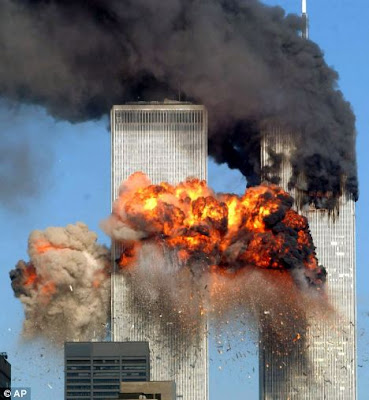
September 11 2001 is a date no-one can forget. On that day, the largest terrorist attack the world had ever seen sent two passenger aircraft crashing into New York's famous twin towers, a third into the Pentagon, and a fourth, believed to be headed for the White House, crashed into a field in Pennsylvania. Three thousand people lost their lives that day. And the world changed forever. The consequences of those attacks have shaped the first years of the twenty-first century. The world is a less safe place because of them. War in Afghanistan and Iraq followed. Thousands more have now died. But what exactly happened on that day ten years ago? Reports have been written and dismissed. Conspiracy theories abound. This book has been four years in the writing. Leading investigative writer, Anthony Summers has pored through thousands of documents, hundreds of hours of interviews, and examined all possible testimony and evidence to produce this definitive history of what really happened on that tragic day.
Writing with access to thousands of recently released official documents, fresh interviews, and the perspective that can come only from a decade of research and reflection, Anthony Summers and Robbyn Swan deliver the first panoramic, authoritative look back at 9/11.For most living Americans, September 11, 2001, is the darkest date in the nation's history. What exactly happened? Could it have been prevented? How and why did so much acrimony and bad information arise from the ashes of the World Trade Center, the Pentagon, and a quiet field in Pennsylvania? And what remains unresolved? What is certain: Discord and dissent continue to this day.
Beginning with the first brutal actions of the hijackers aboard American Airlines Flight 11, The Eleventh Day tracks the precise sequence of events and introduces the players: pilots, terrorists, the airliners' passengers, and the innocents who died on the ground. Drawing on previously classified records and raw transcripts, Summers and Swan investigate the response of President Bush and the U.S. military that day, and the failure to intercept the hijacked airliners. They document the untruths told afterward by U.S. officials and, as a counterpoint, thoroughly consider the contentions of the "9/11 truth" movement. With meticulous research, they examine the personalities of the men behind the onslaught, analyze the motives that drove them, and expose the U.S. intelligence blunders that preceded the attacks. They note how afterward—without good evidence—the Bush administration persisted in trying to link 9/11 to Iraq. And they confront, finally, the question the 9/11 Commission's report blurred: Were the terrorists backed by powerful figures in another foreign nation—one the U.S. had long viewed as a friend?
Riveting, revelatory, and unforgettable, thoroughly sourced and complete with extensive endnotes, The Eleventh Day is the essential one-volume work on a pivotal event in our history.
September 11, 2001 is the darkest date in the memory of most people alive in the West today. The day ten years on when Osama bin Laden was killed was one of jublilation in the United States, yet uncertainty about what may come in the future.
What exactly happened on 9/11? Could it have been prevented? How and why did so much acrimony and bad information arise from the ashes of the World Trade Center, the Pentagon, and a quiet field in Pennsylvania? And what remains unresolved?
Beginning with the first brutal actions of the hijackers aboard American Airlines Flight 11, The Eleventh Day tracks the precise sequence of events and follows the players: pilots, terrorists, the airliners' passengers, and the innocents who died on the gound. Drawing on previously unreleased records and raw transcripts, Anthony Summers and his co-author Robbyn Swan investigate the response of President Bush and the U.S. military that day, and the failure to intercept the hijacked airliners. They document the untruths told afterward by U.S. officials and, by counterpoint, thoroughly consider the contentions of the "9/11 Truth" movement. They analyze the motives that drove the men behind the onslaught, and expose the U.S. intelligence blunders that preceded the attacks. They note how afterward - without good evidence - the Bush administration persisted in trying to link 9/11 to Iraq. And they confront, finally, the questions the 9/11 Commission's report blurred: Were the terrorists backed by powerful figures in other foreign nations - including some that have long been treated as friends?
Riveting, revelatory, and unforgettable, thoroughly sourced and complete with extensive endnotes, The Eleventh Day is the essential one-volume work on a pivotal episode in our history.
Anthony Summers - Home
Best selling biographer and journalist Anthony Summers has covered the pivotal stories of the past hundred years, and in many cases forced a rethink.
He has reported on the conflict in the Middle East; the Vietnam War; the Kennedy and Martin Luther King assassinations; Watergate; the rise and fall of the American Mafia; the Hiss and Profumo espionage cases. He has explored the lives and deaths of the powerful and the famous: from Tsar Nicholas II to Marilyn Monroe, Frank Sinatra, J. Edgar Hoover and Richard Nixon. Now in 2011 he brings the sharpest focus yet to a full account of 9/11, the events that led up to it, and the troubling questions that remain.
Posted on Wed, Sep. 07, 2011
Link to 9/11 hijackers found in Sarasota
By Anthony Summers and Dan Christensen
Special to The Miami Herald
http://www.miamiherald.com/2011/09/07/v-print/2395698/link-to-911-hijackers-found-in.html
Just two weeks before the 9/11 hijackers slammed into the Pentagon and World Trade Center, members of a Saudi family abruptly vacated their luxury home near Sarasota, leaving a brand new car in the driveway, a refrigerator full of food, fruit on the counter — and an open safe in a master bedroom.
In the weeks to follow, law enforcement agents not only discovered the home was visited by vehicles used by the hijackers, but phone calls were linked between the home and those who carried out the death flights — including leader Mohamed Atta — in discoveries never before revealed to the public.
Ten years after the deadliest attack of terrorism on U.S. soil, new information has emerged that shows the FBI found troubling ties between the hijackers and residents in the upscale community in southwest Florida, but the investigation wasn’t reported to Congress or mentioned in the 9/11 Commission Report.
Former U.S. Sen. Bob Graham, the Florida Democrat who co-chaired the congressional Joint Inquiry into the attacks, said he should have been told about the findings, saying it “opens the door to a new chapter of investigation as to the depth of the Saudi role in 9/11. ... No information relative to the named people in Sarasota was disclosed.”
The U.S. Justice Department, the lead agency that investigated the attacks, refused to comment, saying it will discuss only information already released.
The Saudi residents then living at the stylish home, Abdulazzi al-Hiijjii and his wife Anoud, could not be reached, nor could the then-owner of the house, Esam Ghazzawi, who is Anoud’s father. The house was sold in 2003, records show.
For Graham, the connections between the hijackers and residents raise questions about whether other Saudi nationals in Florida knew of the impending attacks, which killed nearly 3,000 people.
The FBI investigation began the month after 9/11 when Larry Berberich, senior administrator and security officer of the gated community known as Prestancia, reported a bizarre event that took place two weeks before the hijackings of four passenger jets that originated in Boston, Newark and Washington.
The couple, living with their small children at the three-bedroom home at 4224 Escondito Circle, had left in a hurry in a white van, probably on Aug. 30.
They abandoned three recently registered vehicles, including a brand-new Chrysler PT Cruiser, in the garage and driveway.
After 9/11, Berberich said he had “a gut feeling” the people at the home may have had something to do with the attacks, prompting the FBI’s probe that would eventually link the hijackers to the house.
As an advisor to the Sarasota County sheriff — Berberich was with the group that received President Bush during his aborted visit to a Sarasota school on the morning of 9/11 — he alerted sheriff’s deputies. Patrick Gallagher, one of the Saudis’ neighbors, had become suspicious even earlier, and had fired off an email to the FBI on the day of the attacks.
Gallagher said law enforcement officers arrived and began an investigation, with agents swarming “all over the place, in their blue jackets,” he recalled.
Jone Weist, president of the group that managed Prestancia, confirmed the arrival of the FBI, which requested copies of the Saudis’ financial transactions involving the house.
Berberich and a senior counterterrorism agent said they were able to get into the abandoned house, ultimately finding “there was mail on the table, dirty diapers in one of the bathrooms … all the toiletries still in place … all their clothes hanging in the closet … opulent furniture, equal or greater in value than the house … the pool running, with toys in it.”
“The beds were made … fruit on the counter … the refrigerator full of food. … It was like they went grocery shopping. Like they went out to a movie ... [But] the safe was open in the master bedroom, with nothing in it, not a paper clip. ... A computer was still there. A computer plug in another room, and the line still there. Looked like they’d taken [another] computer and left the cord.”
The counterterrorism officer, who requested his name not be disclosed, said agents went on to make troubling discoveries: Phone records and the Prestancia gate records linked the house on Escondito Circle to the hijackers.
In addition, three of the four future hijackers had lived in Venice — just 10 miles from the house — for much of the year before 9/11. Atta, the leader, and his companion Marwan al-Shehhi, had been learning to fly small airplanes at Huffman Aviation, a flight school on the edge of the runway at Venice Municipal Airport.
A block away, at Florida Flight Training, accomplice Ziad Jarrah was also taking flying lessons. All three obtained their pilot licenses and afterwards, in the months that led to 9/11, spent much of their time traveling the state, including stints in Hollywood, Fort Lauderdale and Delray Beach, among other areas.
The counterterrorism agent said records of incoming and outgoing calls made at the Escondito house were obtained from the phone company under subpoena.
Agents were able to conduct a link analysis, a system of tracking calls based on dates, times and length of conversations — finding the Escondito calls dating back more than a year, “lined up with the known suspects.”
The links were not only to Atta and his hijack pilots, the agent said, but to 11 other terrorist suspects, including Walid al-Shehhri, one of the men who flew with Atta on the first plane to strike the World Trade Center.
Another was Adnan Shukrijumah, a former Miramar resident identified as having been with Atta in the spring of 2001. Shukrijumah is still at large and is on the FBI’s Most Wanted list.
But it was the gate records at the Prestancia development that produced the most telltale information.
People who arrived by car had to give their names and the address they were visiting. Gate staff would sometimes ask to see a driver’s license and note the name, Berberich said. License plates were photographed.
Atta is known to have used variations of his name, but the license plate of the car he owned was on record.
The vehicle and name information on Atta and Jarrah fit that of drivers entering Prestancia on their way to visit the home at 4224 Escondito Circle, said Berberich and the counterterrorism officer.
Sarasota County property records identify the owners of the house at the time as Ghazzawi and his American-born wife Deborah, both with a post office box in al-Khobar, Saudi Arabia, and the capital, Riyadh.
Ghazzawi was described as a middle-aged financier and interior designer, the owner of many properties, including several in the United States, said the counterterrorism agent.
While Ghazzawi visited the house, the people living there were his daughter Anoud and her husband al-Hiijjii, who appeared to be in his 30s and once identified himself as a college student, said Berberich, who met the son-in-law.
The couple’s sudden departure two weeks before 9/11 was tracked in detail by the FBI after the attacks, the agent said.
First, they traveled to a Ghazzawi property in Arlington, Va., then — with Esam Ghazzawi — via Dulles airport and London’s Heathrow, to Riyadh.
The counterterrorism agent said Ghazzawi and al-Hiijjii had been on a watch list at the FBI and that a U.S. agency tracking terrorist funds was interested in both men even before 9/11.
“464 was Ghazzawi’s number,” the officer said. “I don’t remember the other man’s number.”
About a year after the family abandoned the home, the FBI made an attempt to lure the owner back.
Scott McKay, a Sarasota lawyer for the Prestancia homeowners’ association in its claim for unpaid dues, said the FBI tried to get him to bring the Saudis back for the transaction.
McKay said he tried to get the Ghazzawis to sign the necessary documents in person, but the ploy failed because the documents could legally be signed elsewhere using a notary. Records show Ghazzawi’s signature was notarized by the vice consul of the U.S. embassy in Lebanon in September 2003. Deborah Ghazzawi’s signature was notarized in Riverside County, Calif.
During an interview on Sunday, Graham said he was surprised he wasn’t told about the probe when he was co-chair of Congress’ Joint Inquiry into 9/11 — even though he was especially alert to terrorist information relating to Florida.
“At the beginning of the investigation,” he said, “each of the intelligence agencies, including the FBI, was asked to provide all information that agency possessed in relation to 9/11.”
The fact that the FBI did not tell the Inquiry about the Florida discoveries, Graham says, is similar to the agency’s failure to provide information linking members of the 9/11 terrorist team to other Saudis in California until congressional investigators discovered it themselves.
The Inquiry did nevertheless accumulate a “very large” file on the hijackers in the United States, and later turned it over to the 9/11 Commission. “They did very little with it,” Graham said, “and their reference to Saudi Arabia is almost cryptic sometimes. … I never got a good answer as to why they did not pursue that.”
The final 28-page section of the Inquiry’s report, which deals with “sources of foreign support for some of the Sept. 11 hijackers,” was entirely blanked out. It was kept secret from the public on the orders of former President George W. Bush and is still withheld to this day, Graham said.
This in spite of the fact that Graham and his Republican counterpart, U.S. Sen. Richard Shelby of Alabama, both concluded the release of the pages would not endanger national security.
The grounds for suppressing the material, Graham believes, were “protection of the Saudis from embarrassment, protection of the administration from political embarrassment … some of the unknowns, some of the secrets of 9/11.”
Anthony Summers is co-author of The Eleventh Day: The Full Story of 9/11 & Osama bin Laden. Dan Christensen is the editor of the Broward Bulldog, a not-for-profit online only newspaper created to provide local reporting in the public interest. www.BrowardBulldog.org
Sunday, August 14, 2011
The Disappeared
Photographs of detainees rescued from a secret-police building in Benhazi. Matar’s father’s fate remains unknown. Photo: T. Dworzak/Magnum.
BK Notes: Truth is stranger than fiction, as this novelist illustrates.
The Disappeared
Hisham Matar’s new novel takes on a very personal subject: a father’s abduction by a brutal regime and a son’s unsettling sense of loss.
As Hisham Matar was finishing his latest novel, about a young man so grief-stricken by a father’s absence that he stalks his lovers and wears his suits, word reached Matar that his own father might still be alive. Jaballa Matar was a leading Libyan dissident who vanished without trial in 1990 into Col. Muammar Gaddafi’s dungeons. Over 20 years, the family received only two letters from him, smuggled out of his cell. They feared he was among more than 1,000 political detainees shot dead in a prison riot in the mid-’90s. Then came this sliver of hope, that he had been seen alive in a jail in the capital, Tripoli.
http://www.thedailybeast.com/newsweek/2011/08/14/hisham-matar-s-anatomy-of-a-disappearance.html
For his son, a successful writer living in England, the vague message was “tremendous but unsettling. I felt I’d provoked it, by spending three years on a book taking me into dark places of the soul,” he told NEWSWEEK in his West London apartment. The unverifiable news was “like a voice in my head. Writing this book took me a little too close to the flame.”
Anatomy of a Disappearance is out in the U.S. on Aug. 23. By coincidence, it came out in London on the heels of the Libyan uprising in February that could yet bring a resolution to the author’s torturous uncertainty. On Feb. 3, when Gaddafi still hoped to head off protests, two of Matar’s uncles and two cousins were released after 21 years of wrongful imprisonment, along with eight other political prisoners. His father was not among them.
Matar, 40, with ink-black curls, has a gentle air of detachment and a haunting past. He was born in New York, where his father was a U.N. diplomat, the year after Gaddafi’s bloodless coup. He was raised in Tripoli until he was 9, when his family fled to Egypt. At boarding school in England, he lived under a false identity as “Bob,” a Christian from Cairo, because Libyan agents were picking off political exiles and their families. He was 19, an architecture student in London, when his father was abducted from their Cairo home by Hosni Mubarak’s security forces. They handed him over to be tortured in Tripoli’s Abu Salim prison.
Matar’s 2006 debut, In the Country of Men, revealed a Libya of public executions and private betrayals through the eyes of a boy in the late ’70s whose dissident father is incarcerated by the “Guide.” After that novel, a finalist for the Man Booker Prize, Matar campaigned openly for his father. Desmond Tutu and Salman Rushdie were among his supporters.
The brutal disappearance of a loved one lacks the finality of bereavement. Matar finds it devastating that “their experience continues at the expense of your intimacy. If my father is alive, he’s formed strong friendships in another place. There’s a jealousy.”
Anatomy of a Disappearance moves between Egypt, Switzerland, and London to trace a corrosive love triangle. After fleeing an unnamed dictatorship, 12-year-old Nuri and his widowed father become rivals for a young Egyptian-English woman. When the father is brutally abducted from the bed of a Swiss woman, Nuri’s guilt grows at having lost the father he once wished to banish. It is a haunting tale of a man suspended in the past, his identity fixed by loss.
Matar’s imagination was awakened by his family’s need for subterfuge. When he was 8, his father was listed for interrogation and hid in Europe. His mother, desperate to join him, lied to the authorities that he had abandoned her to start another family. Curious more than upset, Matar pictured a blond half-sibling, and his father with a Swiss wife. When his mother weakened and telephoned her husband, he told her never to call again, and hung up. “It was difficult for both of them,” Matar says. “They had to pretend they were divorced, so they could be together.”
The novel’s dictatorship is 1950s Iraq, not Libya. But Matar, who will teach the fiction of “estrangement and exile” at Barnard College in New York in the fall, knows political exile to be a common Arab predicament. He writes of fathers and sons, but also about history: “My father’s generation were the audacious radicals, drunk on idealism and republican revolutions. My generation is one of disappointment. Exile has made us pessimists.”
Before the Arab Spring, he feared his father’s sacrifice had been futile. Now, seeing Libyan protesters carry pictures of Jaballa Matar and early dissidents who were killed, he believes such people “carved with their bare hands the first steps to this revolution.” When the uprising began, Matar and his wife, Diana, a California-born photographer, channeled information to the media from a makeshift “newsroom” in their London home, making up to 100 calls a day to Libya.
Speaking to his freed uncles gave him joy. “I realized how much you can take from a man, but you can only take so much. My uncle missed 21 years—his children are fully grown—but he still has his humor, intelligence, and resistance.” With Benghazi secured, Matar’s elder brother, Ziad, went searching, “but it yielded nothing. I would be surprised if my father’s alive, but there’s a very reasonable possibility. When the regime falls, we’ll have access to the prisons.”
He views it as scandalous that Western powers were “laughing at Gaddafi privately while doing business” with him and prolonging the regime. Though he is certain it will fall, he worries more about what comes next. After six months of fighting, the rebel coalition “risks being fractured. It’s Gaddafi’s last legacy—to leave us armed and fraught. How will the different factions construct something together where no one is asking for a louder voice or privileges because of how hard they fought or how much they lost?”
Loss has left Matar thirsty for justice, not revenge. The “robust and fair trials” he craves could also yield clues to end his personal anguish.
Like The Daily Beast on Facebook and follow us on Twitter for updates all day long.
Jaggi is an award-winning cultural journalist and critic in London who writes for British national newspapers and contributes to BBC radio.
Tony & Robby on Clarke's Controversy
A CIA 9/11 Cover-Up?
Did the CIA keep mum about two 9/11 hijackers because it tried and failed to recruit them? Anthony Summers and Robbyn Swan, authors of 'The Eleventh Day,' on whether there’s any truth behind ex-Bush official Richard Clarke’s claim.
http://www.thedailybeast.com/articles/2011/08/12/richard-clarke-9-11-interview-was-there-a-cia-coverup.html
By Anthony Summers & Robbyn Swan
Former White House counterterrorism coordinator Richard Clarke has reignited controversy by speculating, in an interview cited in Thursday’s Daily Beast, that the CIA intentionally withheld advance knowledge of two of the 9/11 hijackers from the White House and the FBI, in an attempt to cover up the agency’s failed effort to recruit the two men as assets.
Clarke’s comments—and immediate, emphatic denials from former CIA director George Tenet and two senior CIA officials involved—go to the core of one of the enduring enigmas about 9/11.
Things began to unravel for the CIA on the day of the attacks, just four hours after the Qaeda strikes, according to research we conducted for our new book,The Eleventh Day. Soon after 1 p.m. that day, at agency headquarters in Langley, an aide handed Director Tenet the passenger manifests for the four downed airliners. “Two names,” he said, placing a page on the table where the director could see it, “these two we know.”
Tenet looked, then breathed, “There it is. Confirmation. Oh, Jesus ...”
There on the manifest for Flight 77, listed as traveling in first class, were the names of Nawaf al-Hazmi and his brother, Salem. Also on the manifest, near the front of the coach section, was passenger Khalid al-Mihdhar.
The names Hazmi and Mihdhar were instantly familiar, Tenet has said, because his people had learned only weeks earlier that both men might be in the United States. According to the director’s version of events, the CIA had known of Mihdhar since as early as 1999, identified him as a terrorist suspect by December that year, had him followed, learned he had a valid multiple-entry visa for the United States, and placed him and comrades—including Hazmi—under surveillance for a few days in Southeast Asia. Later, in the spring of 2000, the agency had learned that Hazmi, who also had a multiple-entry visa, had arrived in California.
The director said after 9/11, though, that—in spite of having gained such dynamite information—the CIA had done absolutely nothing about it. The agency had not asked the State Department to place the two terrorists on watch lists at border points, nor asked the FBI to track them down if they were in the United States—not until 19 days before 9/11. The omission, according to the CIA, was simply the result of multiple mistakes.
Historical puzzles are as often explained by screw-ups as by darker truths. What is known of the evidence on Hazmi and Mihdhar, however, makes the screw-up version hard to swallow. Not least because the CIA version of events suggests its officials blew chances to grab the two future hijackers time and time and time again.
At the heart of the suggestion that the agency intentionally withheld information was the discovery by the Justice Department’s inspector-general of a draft cable—one that was prepared but never sent—by an FBI agent on attachment to the CIA’s bin Laden unit.
In January 2000, having had sight of a CIA cable noting that Mihdhar possessed a U.S. visa, agent Doug Miller had swiftly drafted a memo on the matter addressed to the bureau’s own bin Laden unit and its New York field office. Had that memo been sent, the FBI would have learned right then of Mihdhar’s entry visa. The report was blocked, however, on the order of then-deputy chief of the CIA’s bin Laden unit, Tom Wilshire.
Why did he block it? Could it be that the CIA concealed what it knew about Mihdhar and Hazmi because officials feared that precipitate action by the FBI would blow a unique lead? Did the CIA want to monitor the pair’s activity itself, even though its mandate does not allow it to run operations in the United States? Or did it, as some bureau agents suspected—and Clarke has surmised—even hope to turn the two terrorists, to recruit them as informants?
Clarke’s speculation may not be idle. A heavily redacted congressional document shows that in early December 1999, before Mihdhar’s U.S. visa came to light, top CIA officials had debated the lamentable fact that the agency had as yet not penetrated Al Qaeda:
Did the CIA keep mum about two 9/11 hijackers because it tried and failed to recruit them? Anthony Summers and Robbyn Swan, authors of 'The Eleventh Day,' on whether there’s any truth behind ex-Bush official Richard Clarke’s claim.
http://www.thedailybeast.com/articles/2011/08/12/richard-clarke-9-11-interview-was-there-a-cia-coverup.html
By Anthony Summers & Robbyn Swan
Former White House counterterrorism coordinator Richard Clarke has reignited controversy by speculating, in an interview cited in Thursday’s Daily Beast, that the CIA intentionally withheld advance knowledge of two of the 9/11 hijackers from the White House and the FBI, in an attempt to cover up the agency’s failed effort to recruit the two men as assets.
Clarke’s comments—and immediate, emphatic denials from former CIA director George Tenet and two senior CIA officials involved—go to the core of one of the enduring enigmas about 9/11.
Things began to unravel for the CIA on the day of the attacks, just four hours after the Qaeda strikes, according to research we conducted for our new book,The Eleventh Day. Soon after 1 p.m. that day, at agency headquarters in Langley, an aide handed Director Tenet the passenger manifests for the four downed airliners. “Two names,” he said, placing a page on the table where the director could see it, “these two we know.”
Tenet looked, then breathed, “There it is. Confirmation. Oh, Jesus ...”
There on the manifest for Flight 77, listed as traveling in first class, were the names of Nawaf al-Hazmi and his brother, Salem. Also on the manifest, near the front of the coach section, was passenger Khalid al-Mihdhar.
The names Hazmi and Mihdhar were instantly familiar, Tenet has said, because his people had learned only weeks earlier that both men might be in the United States. According to the director’s version of events, the CIA had known of Mihdhar since as early as 1999, identified him as a terrorist suspect by December that year, had him followed, learned he had a valid multiple-entry visa for the United States, and placed him and comrades—including Hazmi—under surveillance for a few days in Southeast Asia. Later, in the spring of 2000, the agency had learned that Hazmi, who also had a multiple-entry visa, had arrived in California.
The director said after 9/11, though, that—in spite of having gained such dynamite information—the CIA had done absolutely nothing about it. The agency had not asked the State Department to place the two terrorists on watch lists at border points, nor asked the FBI to track them down if they were in the United States—not until 19 days before 9/11. The omission, according to the CIA, was simply the result of multiple mistakes.
Historical puzzles are as often explained by screw-ups as by darker truths. What is known of the evidence on Hazmi and Mihdhar, however, makes the screw-up version hard to swallow. Not least because the CIA version of events suggests its officials blew chances to grab the two future hijackers time and time and time again.
At the heart of the suggestion that the agency intentionally withheld information was the discovery by the Justice Department’s inspector-general of a draft cable—one that was prepared but never sent—by an FBI agent on attachment to the CIA’s bin Laden unit.
In January 2000, having had sight of a CIA cable noting that Mihdhar possessed a U.S. visa, agent Doug Miller had swiftly drafted a memo on the matter addressed to the bureau’s own bin Laden unit and its New York field office. Had that memo been sent, the FBI would have learned right then of Mihdhar’s entry visa. The report was blocked, however, on the order of then-deputy chief of the CIA’s bin Laden unit, Tom Wilshire.
Why did he block it? Could it be that the CIA concealed what it knew about Mihdhar and Hazmi because officials feared that precipitate action by the FBI would blow a unique lead? Did the CIA want to monitor the pair’s activity itself, even though its mandate does not allow it to run operations in the United States? Or did it, as some bureau agents suspected—and Clarke has surmised—even hope to turn the two terrorists, to recruit them as informants?
Clarke’s speculation may not be idle. A heavily redacted congressional document shows that in early December 1999, before Mihdhar’s U.S. visa came to light, top CIA officials had debated the lamentable fact that the agency had as yet not penetrated Al Qaeda:
Winnipge Free Press Review of Eleventh Day
FYI
Winnipeg Free Press - PRINT EDITION
http://www.winnipegfreepress.com/opinion/fyi/a-convincing-argument--4-127648388.html
Conspiracies and catastrophe
British co-authors contend that Bush administration incompetence and cover-ups, combined with America's illogical Middle East position, lit the fuse for 9/11 attacks
Reviewed by: Michael Dudley
Posted: 08/13/2011 1:00 AM
The Eleventh Day
The Full Story of 9/11 and Osama bin Laden
By Anthony Summers and Robbyn Swan
Ballantine, 624 pages, $34
For those readers who find it difficult to believe that Bush administration insiders could have engineered the 9/11 attacks -- and more important, for those who don't -- this ambitious book would have you consider what its authors believe is a more plausible and politically charged set of 9/11 conspiracies.
With the 10th anniversary of 9/11 almost upon us, The Eleventh Day forges a coherent narrative out of this horrific, momentous yet poorly understood tragedy, and emerges as a cogent portrait of governmental incompetence, intransigence and deception.
British investigative journalists Anthony Summers and Robbyn Swan are the husband and wife co-authors of previous books on Frank Sinatra and J. Edgar Hoover, while Summers previously wrote on the conspiracy to assassinate JFK, the murder of the Romanovs and the arrogant will to power of Richard Nixon.
Here they offer what they claim is the "full" account of 9/11, from the origins of Osama bin Laden's radicalism right up to his assassination by the Obama administration this past spring.
In what must have been a painstaking effort over five years, the authors sifted through conflicting testimonies and competing versions of events (including tens of thousands of documents released by the 9/11 Commission) to piece together the catastrophe and the history that preceded it. The result is meticulous, gripping journalism, told with moral conviction.
The book begins with a harrowing retelling of the attack, followed by the authors' assessment of efforts to understand it through popular speculation and official investigations. In the second half, Summers and Swan reconstruct their own thorough account of the plot led by bin Laden and Khalid Sheikh Mohammed, and the misbegotten efforts to track bin Laden through the '90s and beyond.
They demonstrate convincingly that, even as preparations for the attack escalated and warnings grew more frantic from both foreign intelligence agencies and George W. Bush's own counter-terrorism adviser Richard Clarke, the U.S. president's administration assiduously ignored the threat and, indeed, became impatient with any attempt to raise it.
According to Summers and Swan, Bush and his administration not only covered up their own blinkered inattention to al-Qaida prior to the attacks -- and incompetence and dysfunction on the day itself -- but stonewalled investigations into the attack to downplay the hijackers' real motivations and protect the foreign government that funded them.
In this effort Bush was aided in no small way by the phenomenally widespread but often science-fictional claims of the so-called "9/11 Truth Movement," which, in the authors' view, drew attention away from actual official omissions, distortions and malfeasance. Where Summers' earlier work on JFK articulated the case for conspiracy, here he and Swan find no merit in the arguments of the Truthers, which the authors methodically demolish.
In contrast with most mainstream efforts to debunk 9/11 skepticism (such as Toronto journalist Jonathan Kay's recentAmong the Truthers, which lumped 9/11 conspirators in with all manner of paranoid beliefs) Summers and Swan do not rely on ad hominem characterizations to debunk these ideas.
Instead they consider each major theory in light of the available evidence. They find that the unconventional collapses of the Twin Towers have been convincingly explained as the result of the laws of physics rather than of planted demolition charges, and the notion that no plane hit the Pentagon is simply offensive, given the personal and emotionally wrenching testimony they provide of those who had to sift through the wreckage there.
The real cover-up, they argue, concerned not just the actions of the government, the FBI and the CIA in advance of the attacks, but more significantly the financial and material support provided by the Saudi royal family for the 19 hijackers.
Steeped in fundamentalist Wahhabism -- a severely austere, rigid and conservative branch of Islam -- elite Saudi society including the royal family sympathized with bin Laden's ideology, particularly with regards to his desire to liberate Palestine from Israeli occupation and punish the U.S. for its support of the Jewish state.
Very little of this information would be revealed by the 9/11 Commission. Between misleading the commission, redacting key documents implicating Saudi Arabia and selling the American public on the completely fabricated role of Iraq in the attacks, the Bush administration managed to divert public attention away from the political realities that underlay 9/11.
Ultimately, argue Summers and Swan, it was America's untenable position in the Middle East -- dependence on Saudi oil while incurring Saudi hostility over its unwavering support for Israel - that doomed nearly 2,800 people on that day, as well as more than 100,000 Afghans and Iraqis killed in wars cynically justified by 9/11.
Committed Truthers and partisans of the former president alike will probably object to a great deal of the authors' analysis, but open-minded readers will find The Eleventh Daya thoughtful and sobering reassessment of the most pivotal event of our times.
Michael Dudley is a research associate and library co-ordinator in the Institute of Urban Studies at the University of Winnipeg.
Republished from the Winnipeg Free Press print edition August 13, 2011 J5
Winnipeg Free Press - PRINT EDITION
http://www.winnipegfreepress.com/opinion/fyi/a-convincing-argument--4-127648388.html
Conspiracies and catastrophe
British co-authors contend that Bush administration incompetence and cover-ups, combined with America's illogical Middle East position, lit the fuse for 9/11 attacks
Reviewed by: Michael Dudley
Posted: 08/13/2011 1:00 AM
The Eleventh Day
The Full Story of 9/11 and Osama bin Laden
By Anthony Summers and Robbyn Swan
Ballantine, 624 pages, $34
For those readers who find it difficult to believe that Bush administration insiders could have engineered the 9/11 attacks -- and more important, for those who don't -- this ambitious book would have you consider what its authors believe is a more plausible and politically charged set of 9/11 conspiracies.
With the 10th anniversary of 9/11 almost upon us, The Eleventh Day forges a coherent narrative out of this horrific, momentous yet poorly understood tragedy, and emerges as a cogent portrait of governmental incompetence, intransigence and deception.
British investigative journalists Anthony Summers and Robbyn Swan are the husband and wife co-authors of previous books on Frank Sinatra and J. Edgar Hoover, while Summers previously wrote on the conspiracy to assassinate JFK, the murder of the Romanovs and the arrogant will to power of Richard Nixon.
Here they offer what they claim is the "full" account of 9/11, from the origins of Osama bin Laden's radicalism right up to his assassination by the Obama administration this past spring.
In what must have been a painstaking effort over five years, the authors sifted through conflicting testimonies and competing versions of events (including tens of thousands of documents released by the 9/11 Commission) to piece together the catastrophe and the history that preceded it. The result is meticulous, gripping journalism, told with moral conviction.
The book begins with a harrowing retelling of the attack, followed by the authors' assessment of efforts to understand it through popular speculation and official investigations. In the second half, Summers and Swan reconstruct their own thorough account of the plot led by bin Laden and Khalid Sheikh Mohammed, and the misbegotten efforts to track bin Laden through the '90s and beyond.
They demonstrate convincingly that, even as preparations for the attack escalated and warnings grew more frantic from both foreign intelligence agencies and George W. Bush's own counter-terrorism adviser Richard Clarke, the U.S. president's administration assiduously ignored the threat and, indeed, became impatient with any attempt to raise it.
According to Summers and Swan, Bush and his administration not only covered up their own blinkered inattention to al-Qaida prior to the attacks -- and incompetence and dysfunction on the day itself -- but stonewalled investigations into the attack to downplay the hijackers' real motivations and protect the foreign government that funded them.
In this effort Bush was aided in no small way by the phenomenally widespread but often science-fictional claims of the so-called "9/11 Truth Movement," which, in the authors' view, drew attention away from actual official omissions, distortions and malfeasance. Where Summers' earlier work on JFK articulated the case for conspiracy, here he and Swan find no merit in the arguments of the Truthers, which the authors methodically demolish.
In contrast with most mainstream efforts to debunk 9/11 skepticism (such as Toronto journalist Jonathan Kay's recentAmong the Truthers, which lumped 9/11 conspirators in with all manner of paranoid beliefs) Summers and Swan do not rely on ad hominem characterizations to debunk these ideas.
Instead they consider each major theory in light of the available evidence. They find that the unconventional collapses of the Twin Towers have been convincingly explained as the result of the laws of physics rather than of planted demolition charges, and the notion that no plane hit the Pentagon is simply offensive, given the personal and emotionally wrenching testimony they provide of those who had to sift through the wreckage there.
The real cover-up, they argue, concerned not just the actions of the government, the FBI and the CIA in advance of the attacks, but more significantly the financial and material support provided by the Saudi royal family for the 19 hijackers.
Steeped in fundamentalist Wahhabism -- a severely austere, rigid and conservative branch of Islam -- elite Saudi society including the royal family sympathized with bin Laden's ideology, particularly with regards to his desire to liberate Palestine from Israeli occupation and punish the U.S. for its support of the Jewish state.
Very little of this information would be revealed by the 9/11 Commission. Between misleading the commission, redacting key documents implicating Saudi Arabia and selling the American public on the completely fabricated role of Iraq in the attacks, the Bush administration managed to divert public attention away from the political realities that underlay 9/11.
Ultimately, argue Summers and Swan, it was America's untenable position in the Middle East -- dependence on Saudi oil while incurring Saudi hostility over its unwavering support for Israel - that doomed nearly 2,800 people on that day, as well as more than 100,000 Afghans and Iraqis killed in wars cynically justified by 9/11.
Committed Truthers and partisans of the former president alike will probably object to a great deal of the authors' analysis, but open-minded readers will find The Eleventh Daya thoughtful and sobering reassessment of the most pivotal event of our times.
Michael Dudley is a research associate and library co-ordinator in the Institute of Urban Studies at the University of Winnipeg.
Republished from the Winnipeg Free Press print edition August 13, 2011 J5
Subscribe to:
Posts (Atom)


